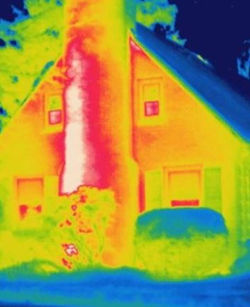
thermal imaging assessment will identify invisible anomalies found in your home, your property or equipment
Heating and Insulation efficiency:
Loss of heat due to gaps. Lack of correct insulation is one major anomaly of any property.
In summer this is resulting in unpleasant overheating of the property.
In winter it is letting cold air in.
Consequence: Extra costs on your fuel bills. Also possible fire issue.
Electrical safety:
Hotspots in electrical connections can cause overheating, resulting in damage. This is probably the most important safety inspection.
Consequence: Resulting simply in devastating fire. Even loss of personal possessions or even life.

Moisture status:
Water leaks (small or large) may cause extensive damage to your property.
Most are in areas not easily reached or visible.
Consequence: High cost of repairs or even rebuilding and lot of unpleasant upheaval.
 |  |
|---|---|
 |  |
 |  |
 |  |
 |  |
 |  |
 |  |
 |  |
 |  |
 |  |
Consequence summary:
Health consequence:
Hot temperatures can seriously impact your health.
Increased body temperature can cause heavy sweating, clammy skin, dehydration, tiredness, headache, dizziness, nausea, cramps, and a quick, weak pulse.
Inhaling mould fragments or spores can inflame the airways, causing nasal congestion, wheezing, chest tightness, coughing and throat irritation. Prolonged exposure to high levels of in door dampness can reduce lung function and cause chronic health problems such as asthma.
Stress symptoms can affect your body, your thoughts and feelings, and your behavior.
Being able to recognize common stress symptoms can help you manage them.
Stress that's left unchecked can contribute to many health problems, such as high blood pressure, heart disease, obesity and diabetes.
Personal consequence:
Loss personal possessions and much more if fire due to faulty electrics.
Fire involves not only the loss of your residence, but also many other things of value such as photo albums, important documents and treasured objects.
Most importantly, though, the home is your place of security, comfort and safety.
After a fire, this sense of security can also be lost and can significantly disrupt the normality of daily life.
It is common for people to experience several stages of adjustment including shock, anger, depression and hopelessness.
Financial consequence:
With no positive solutions put in place consequences could be ongoing and considerable high fuel bills.
In the event of substantial damage there are repair costs, insurance cost and interruption of life costs.
All that is added to the emotional upheaval.

According to UK Government Fire Statistics, most electrical fires start in the bedroom, with the highest number of fatalities occurring when fires start from within living rooms. Electrical fires happen because of problems in house wiring or appliance failures, but many occur due to mistakes that homeowners make like overloading electrical sockets or extension leads.
Here are the five most common causes of electrical fires in homes:
Faulty Sockets / Appliances
Most electrical fires are caused by faulty electrical plug sockets and dated appliances that have been around for a while. Don’t use an appliance with a worn cord which could send heat onto combustible surfaces like floors, curtains, and rugs that can start a fire.
Light Fixtures & Fittings
Lamps, light bulbs, and light fixtures and fittings are another common reason for electrical fires. Installing a bulb with a wattage too high for the lamps and light fixtures is a leading cause of electrical fires. Check the maximum recommended bulb wattage on any lighting fixture or lamp and never exceed this amount. Putting materials like cloth over a lampshade is also a cause, the material heats up and ignites, causing fire.
Extension Leads
Appliances should be plugged directly into outlet and not plugged into an extension lead for any length of time. Only use extension cords as a temporary measure.
Portable Heaters
Many times people put these types of heaters too close to combustible surfaces such as curtains, beds, clothing, chairs, sofas and rugs. Coil space heaters are especially dangerous due to the coils becoming so hot that they will almost instantly ignite any nearby flammable surface. If you do use portable heaters, use the radiator-type that diffuse heat over the entire surface of the appliance.
Outdated Wiring Systems
If a home is over 20 years old, it may not have the wiring capacity to handle the increased amounts of electrical appliances in today’s average UK home, such as computers, televisions, games consoles, kitchen gadgets etc. Breakers should be triggered when circuits get overloaded by too much electricity, but outdated breaker boxes often have worn connectors that do not work, causing the system to overload and start an electrical fire.
Those were the top five most common causes of electrical fires in UK homes. If you can run through this list and be happy that every one has been considered or actioned, then you’ve given your home the best chance against fire.
For more information don't hesitate to contact us. Stay safe.

 |  |  |
|---|---|---|
 |